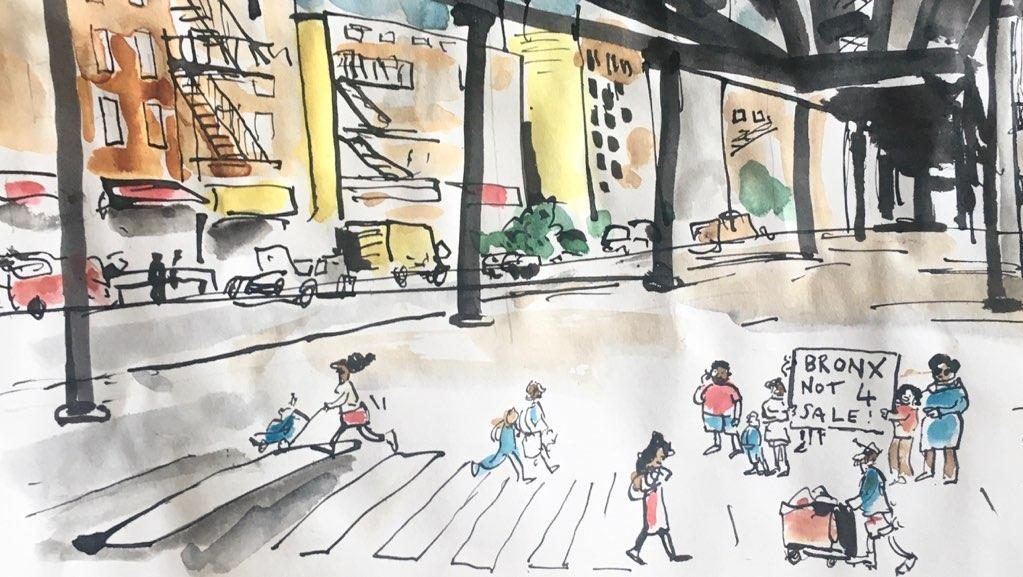
They say you can’t stand in the same river twice and maybe that’s particularly true of the Bronx River? Only now, two years later, do I fully realise how singular my six months there was. In some ways, it was the best of times for me. But the pall of the pandemic made it the worst of times for millions. Revisiting for a two week “working holiday”, I had a vivid gauge for how unusual that time was.
When I first arrived on Allerton Avenue on June 21st, 2021, I had nothing to compare it with. During my stay, I began to notice similarities with back home and I got used to the strangeness, but I now see that some of what I was experiencing was exceptional.
Like most hard-pressed working class communities, the Bronx suffered badly when life, home, family, education and work were at risk from COIVD. As well as the dangers of sickness and death, a highly valued street culture was threatened. Extended kinship and social networks were scrambled and to some extent, literally, forced indoors.
I saw signs of this in summer 2021, albeit as the worst days of the crisis receded. Many of the people I interacted with, even allowing for my outsider status, were cautious. Various COVID protocols remained and quite a few places were still closed. There was an underlying anxiety about the city, even as an attempt was made to “get back to normal”. This was probably most obvious when riding the Subway, where almost every journey brought deeply troubled individuals behaving in ways that could – and occasionally did – break into angry confrontations. There was a tabloid media driven moral panic about homeless people, who were everywhere. A particular feature of the Bronx back then was extreme noise: almost, it now seems in retrospect, like a collective rebellion against and relief from, lockdown. The streets were constantly filled with incredibly loud music, often coming from incredibly loud cars. Motorcycle gangs of up to fifty roared around the streets. Fireworks were going off constantly, not just on the Fourth of July.
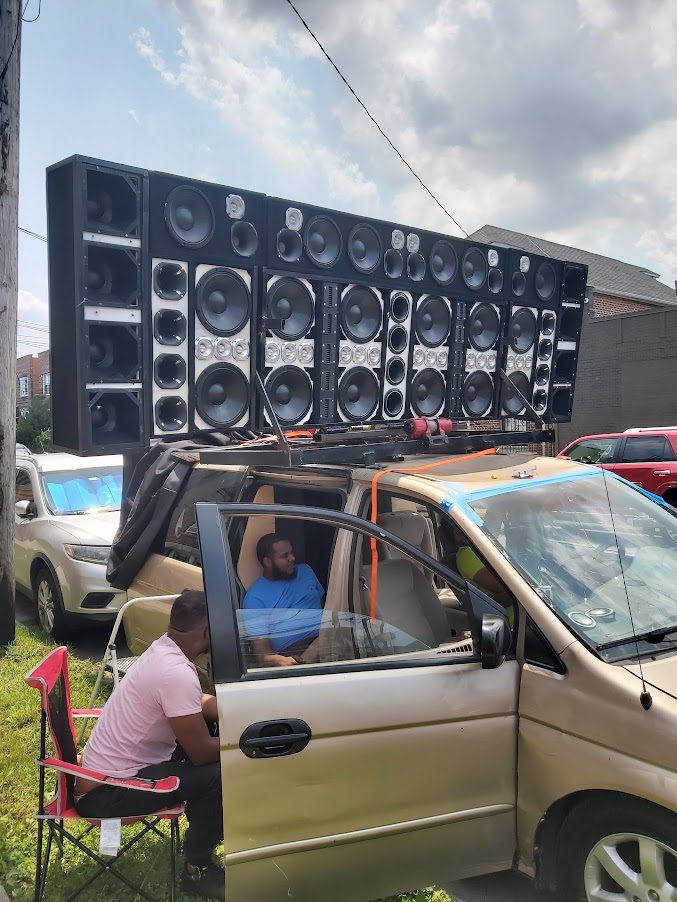
I don’t want to give the impression that Bronx 2023 is like Royal Tunbridge Wells, but it’s noticeably calmer and quieter. I’ve been able to meet people in a far more relaxed way than two years ago. Subway journeys have been much less exciting and although I’m certain the city’s housing problem is as bad as ever, for reasons I can’t explain, it’s far less visible.
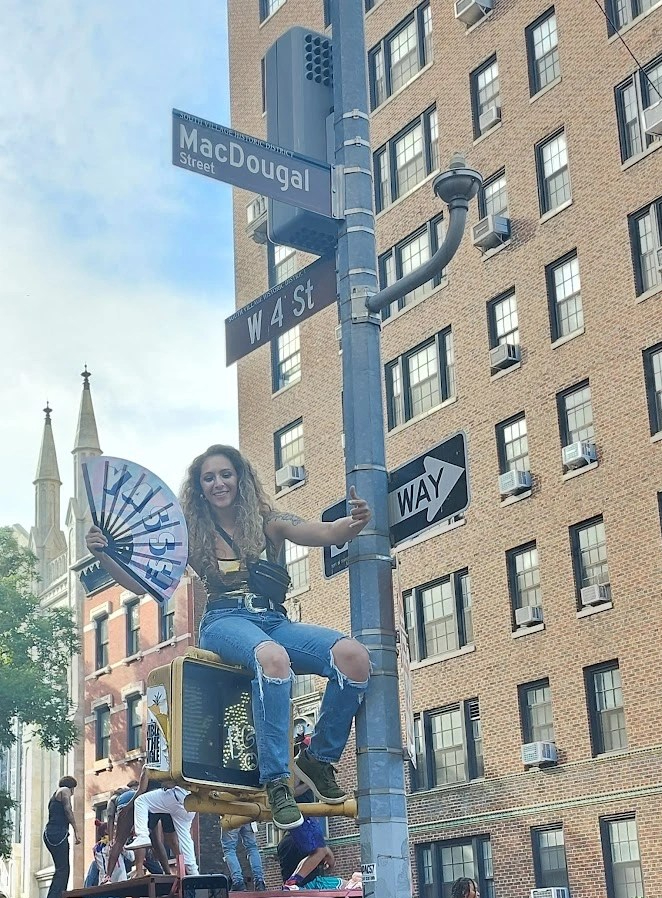
Some of all this was brought into focus for me because, for some of this trip, I was joined by my 13 year-old granddaughter. Before coming, I’d been a little anxious at how she would cope with NYC and the Bronx for the first time. We’d talked about it and she calmed my uncertainties by saying that, as someone born and bred in the East End of London, she’d probably seen it all before. I knew that wasn’t strictly true, but I was reassured and in practice, she did seem pretty relaxed in her new surroundings – and without her being in town, I probably wouldn’t have gone on the Reclaim Pride march, an absolutely memorable and inspiring experience, even if, at times, it made granddad feel like a granddad.
One of the other things I’d been worried about before revisiting the Bronx, was that the area of the borough I know best, would have succumbed to the onslaught of “gentrification” that has been predicted, planned and hoped for by some. In 2021, I did a fairly comprehensive survey of the active building sites along a stretch of Jerome Avenue ear-marked for the kind of new development beloved of real estate-friendly planners and politicians. I counted two million square feet of “Work in Progress” (equivalent of about three Yankee Stadiums, which marks the southern end of the so-called Jerome Corridor).
I knew, almost without having to look, that very few of the new buildings would provide housing at a price those most in need – many of them already living in the neighbourhood in sub-standard private renting – could afford. But I was also concerned that many of their workplaces and shops would have been squeezed out. The profusion of car repair garages (“clunker shops”) and independent groceries (“bodegas”) don’t fit with some visions for the future of the Bronx.
To some extent, I was relieved. Walking along Jerome, many of the sites I’d seen in 2021 had come to, or were nearing, completion, but the kind of displacement domino effect I’d feared hasn’t happened – yet. I still think the area is at risk of the same physical transformation and socio-ethnic cleansing that has befallen other places, in New York City and beyond. But these things usually take longer than two years and maybe there’s sufficient uncertainty about the future to, at least, slow things down. Rising interest rates and the ridiculous over-supply of commercial real estate and the over-priced apartments that go with it, suggest the post-COVID metropolis is still in a state of hiatus.

The same can probably be said of US politics. Like the Bronx, the noise and fear seem to have calmed a bit, but probably not for long. Sadly, although it’s not an immediate concern in the city of his birth (where he’s mostly despised), the future of US politics is still the future of Trump. It’s very difficult to read where next year’s Presidential election will take him, or the country. Almost everyone I spoke to feels it’s as likely as not that he’ll win again. Of course, his multiple legal difficulties mean he could end up in a prison cell, not the Oval Office. I’d love to see him in a jump suit to match his face, but I think it’s unlikely. In the end, however loathsome he is, the legal system is designed for, not against him. Some commentators think he’s over-stepped the mark, even for corrupt politicians and that the latest “gotcha” tape of him bragging about classified documents will take him down. Perhaps. But what I heard on the recording was a group of sycophants laughing while he ordered Coke and I fear that may prove emblematic.
I notice I’m not writing anything about Biden, the Democratic Party or other potential forces of opposition to Trump – and there’s the rub. In 2021 – and still in the aftermath of Black Lives Matter – New York was buzzing with political activism. Allowing for the ever-important fact that the eastern and western seaboards are not representative of the nation, again, on this (much shorter) trip, I’ve had a sense of an uneasy lull.
Meanwhile though, significant social changes are happening in the country and are likely to carry on, whoever wins in November 2024. The Supreme Court has become a de facto legislator, reversing various hard-won legal reforms. It started with Roe v Wade and continues, up until when I flew home yesterday, when laws attempting to redress historic ethnic inequality in higher education were overturned. Linked to this is an aggressive reassertion of State’s Rights, whereby reactionary politicians attack a host of laws, particularly targeting the LGBT+ community, that have sought to promote equality, The most egregious example getting some attention while I was away was the rollback of child labour laws in Arkansas. It’s far too early to talk about secession of States that don’t like “liberal America”, but it’s probably more likely now, than at any time since 1861,
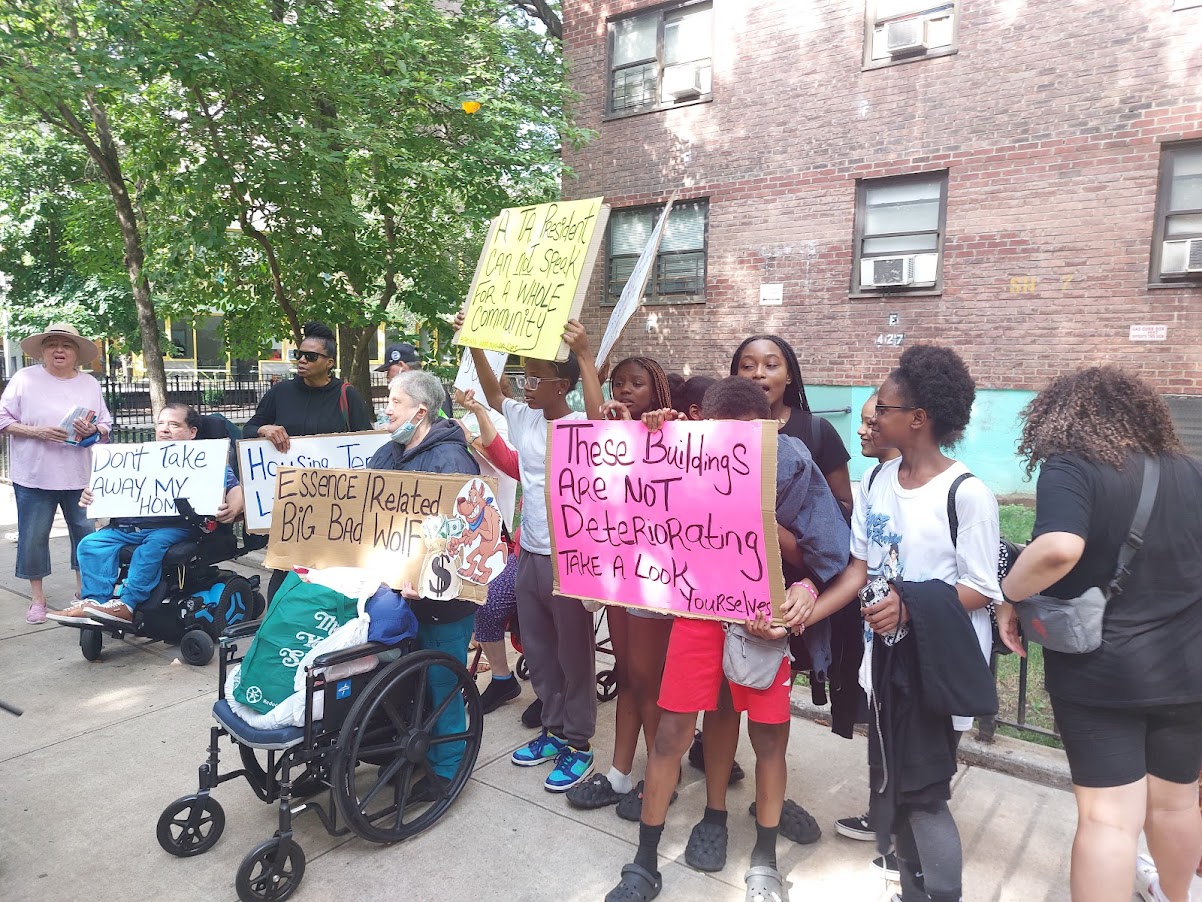
Back in the Big Apple, two important local housing issues caught my attention. The on-going, deeply misguided, attempt to privatise by stealth the city’s public housing is accelerating. Last Tuesday, I attended a protest against the planned demolition of two New York City Housing Authority (NYCHA) sites in the Chelsea neighbourhood. As someone who’s followed this kind of thing for two decades, it’s the most blatant land-grab I’ve ever seen. One of the key features of NYCHA’s 170,000 homes is that many of them are in areas where, without public ownership (or a close non-market alternative), working class people couldn’t possibly afford the rent. Chelsea and Elliot Houses are a classic example. Things turned a bit heated at the protest because some people, who support demolition, tried to drown out those who don’t. It was all horribly familiar from numerous campaigns to save council housing in the UK. When I challenged one of the pro-privatisation stooges, he said “ We’ve heard about what’s happened in London and it’s great!”. This didn’t surprise me because there are clear links between what NYCHA is trying to do and UK privateers like Notting Hill-Genesis. Sadly, some New Yorkers, including sections of the left, have bought the vested interest “there’s no alternative” position hook, line and sinker.
Public housing is intrinsic to New York City and the same could be said of its 40,000 homes created by the trade union movement as limited equity co-ops, the first of which is The Amalgamated in the Bronx. I’ve been getting to know this special place since I first visited in 2015 and am hoping to celebrate its centenary in 2027, if it survives its current financial crisis. During this trip, I had the opportunity to meet several Amalgamated residents, some truly remarkable people of the kind that keeps me going back to their city. I plan to write more about the Amalgamated story in the future.
However, none of this really matters in the context of the existential crisis facing New York, the USA and the World. As I was leaving, an “air quality advisory” was issued, something that’s become fairly regular in NYC since I was there in 2021, although even then, there were days when a hazy shroud, caused by forest fires in California 3,000 miles away, veiled the sun. It’s got closer and worse since, with huge fires in Canada turning the New York sky sci-fi orange a few weeks ago. This is the city’s future present, offering a choice between drowning, choking or burning to death unless serious action is taken on climate change. I’m aware that may entail restrictions on trans-Atlantic flying. So be it. I don’t think individual actions can save the planet and I’m not done with the USA yet. But I know a change has gotta come.
 Bronx Tales